Posts

High-Performance and Scalable Agent-Based Simulation with BioDynaMo

Image
We’d like to congratulate Lukas Breitwieser and co-authors Ahmad Hesam, Fons Rademakers, Juan Gómez Luna, Onur Mutlu on receiving the Best Artifact Award at   PPoPP 2023   for   BioDynaMo , a flexible and high-performance agent based simulation engine . Abstract: Agent-based modeling plays an essential role in gaining insights into biology, sociology, economics, and other fields. However, many existing agent-based simulation platforms are not suitable for large-scale studies due to the low performance of the underlying simulation engines. To overcome this limitation, we present a novel high-performance simulation engine, BioDynaMo. We identify three key challenges for which we present the following solutions. First, to maximize parallelization, we present an optimized grid to search for neighbors and parallelize the merging of thread-local results. Second, we reduce the memory access latency with a NUMA-aware agent iterator, agent sorting with a space-filling curve, and ...
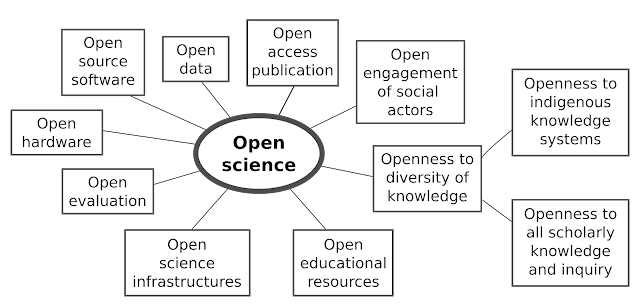
Congratulations to the winners of the 2022 YERUN Open Science Awards!

Image
On Tuesday 14 February 2023, the Young European Research Universities (YERUN) has announced the winners of their 2022 Open Science Awards , and the BioDynaMo Consortium would like to hereby congratulate the 5 winner projects: ROCK – Reproducible Open Coding Kit , submitted by Dr. Szilvia Zörgő &  Dr.Gjalt-Jorn Peters from Maastricht University. ROCK is a standard for performing qualitative coding and analyses in a transparent manner. It was developed by the applicants to tackle the lack of Open-Source software tools for qualitative research. Presentation available at this link .  LERO Open Science Committee , submitted by Prof. Brian Fitzgerald & Dr. Martina Prendergast from the University of Limerick. The LERO Open Science Committee was formed in 2022 to develop centre-wide strategies that lead to increased visibility for researchers, greater opportunities for collaboration and greater transparency in the research process. Presentation available at this link .  ...

The BioDynaMo consortium welcomes its new technical coordinator, Vasileios Vavourakis from the University of Cyprus.

Image
On 20 September 2022, the consortium Board of BioDynaMo voted to transfer the technical coordination of the project to Assistant Professor  Vasileios Vavourakis at the University of Cyprus. Until now, the technical development has been coordinated from CERN, the European Laboratory for Particle Physics. untitled image by SPRKLG , licensed under CC BY 2.0 The project was launched back in 2015 as part of CERN openlab ’s work with Intel on code modernization, and received support from the CERN budget for knowledge transfer to medical applications. Its primary goal was to accelerate biological simulation. Agent-based simulation is central to a wide range of research fields, from biology to finance and social sciences. Today, BioDynaMo is a powerful software platform for creating, running and visualising all kinds of 3D agent-based simulations.   “The original simulator we used was Cortex3D, but we soon decided to join forces to design and develop a truly cutting-ed...

BioDynaMo Version 1.04 Released

 I am pleased to announce the release of BioDynaMo 1.04. Please have a look at the release notes , installation instructions and examples for further information. Thanks and enjoy! Lukas Breitwieser for the BioDynaMo team

BioDynaMo Version 1.02 Released

 I am pleased to announce the release of BioDynaMo 1.02. Please have a look at the release notes , installation instructions and examples for further information. The following publication gives a good overview about BioDynaMo's features and capabilities. BioDynaMo: a modular platform for high-performance agent-based simulation Lukas Breitwieser, Ahmad Hesam, Jean de Montigny, Vasileios Vavourakis, Alexandros Iosif, Jack Jennings, Marcus Kaiser, Marco Manca, Alberto Di Meglio, Zaid Al-Ars, Fons Rademakers, Onur Mutlu, Roman Bauer Bioinformatics, 2021, doi: https://doi.org/10.1093/bioinformatics/btab649 Thanks and enjoy! Lukas Breitwieser for the BioDynaMo team

BioDynaMo Workshop on Agent-Based Modeling

 We are hosting a free online workshop on agent-based modeling on 19 November: https://indico.cern.ch/event/1095422/ The event is open to all!

Using BioDynaMo to Study Virus Spread in Closed Environments

Image
 Viral contamination between individuals is enlarged in closed environments, especially in poorly ventilated areas. Studying different conditions influencing the risk of infection for people in closed spaces is then critical. Available models can not simulate both the movement of people and the turbulence of airflows and trajectory of droplets containing viral particles. Many studies only use static individuals with detailed simulation of droplets, or agent movement alongside virus spreading but using only a simplistic diffusion mechanism. Simulating displacement of agents together with detailed spreading of virus particles will be a valuable contribution to the field. In collaboration with the epidemiological department of the University of Geneva, we have developed a computational tool for modeling agent displacement and aerosol and droplet spreading. We built an interface between BioDynaMo ( https://biodynamo.org/ ), an agent based simulation framework, and OpenLB ( h...